About Fine Jewelry
In a photo the details which make a piece of jewelry enjoy to wear are easy to see over. An earring’s securement, the length of a chain, the fit of a bracelet may at times play a larger role than do the stones. Upon finding a design you like pay close attention to how it is made and how it will sit once worn.
Earrings: Consider the Fit as Well as the Design
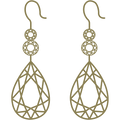
Studs sit near the earlobe, huggies curve closely around it, and drop earrings extend below it. Compare the finished dimensions to judge how much coverage or movement you want.
The collection includes push back, screw back, lever back, clip on, and other earring designs. Check the fastening on the specific pair you select; a similar appearance from the front does not mean two pairs attach in the same way.
For hoops, look at the diameter and stone placement. Inside out styles display stones along different sections of the hoop, while graduated designs vary the stone sizes along the curve.
A Pendant Can Carry Something Personal
Initials, names, photo designs, and other personalized pendants offer a direct connection to the wearer. Motifs such as a paw, flower, cross, or cat and moon provide another way to choose a piece around something meaningful.
Compare the complete pendant dimensions rather than only its stone weight. An open-circle design may cover more space at the neckline than a compact cluster, even when it contains less stone weight.
When exploring moissanite pendants, check whether the selected option includes a chain. If you already have one, confirm that its thickness and clasp can pass through the pendant’s bail.
Choose How the Jewelry Sits Around Your Wrist or Neck
Tennis designs connect stones in a continuous sequence. Station bracelets and necklaces leave sections of chain between the stones, while solitaire chain bracelets concentrate the detail in one place.
Link and Cuban link bracelets make the metal pattern more prominent. Bangles and open cuffs offer a more structured fit than a flexible chain. These are different wearing experiences, so compare the construction alongside the appearance.
Measure before choosing a length or size. For necklaces, consider where you want the piece to rest against your neckline. For bracelets, decide how much movement you prefer around your wrist and follow the product’s sizing guidance.
Fine Details Give Familiar Pieces a Different Finish
Milgrain we see to be a fine beaded border which frames a setting, at the same time floral clusters we see to brings individual stones forward into a larger design. With bezel settings on the other hand each stone is given a defined metal edge and a clean structured look.
We find Old Mine cushion, Old European round and other cutting styles in some of the earrings, pendants, bracelets and men’s jewelry. What we are seeing is that the past cutting trends and decorative elements are making their way into other than the traditional engagement ring designs.
Up close images will allow you to see the small details, also photos of the jewelry as it is worn give a better idea of the actual scale. A detail which may appear to be large in a close up may in fact look very different when the jewelry is worn.
Compare the Exact Option You Plan to Buy
Some listings present a variety of stone types, lengths, and metal options. For what you see to be accurate do compare only like with like. When you are looking at center and accent stones they may be described separately.
In pieces which combine materials the main stone may differ from the accent stones which may also use different materials.
FAQs
Q. What should I consider when choosing fine jewelry?
A. Consider the piece's purpose, size, stone type, metal, proportions, and how it will work with jewelry you already own.
Q. Can different types of fine jewelry be worn together?
A. Yes. Rings, earrings, bracelets, and pendants can be combined by repeating a stone shape, metal, or similar design detail.
Q. How do I choose between moissanite and lab grown diamonds?
A. Compare their appearance, stone characteristics, design preferences, and the type of jewelry you want to create.
Q. Should fine jewelry pieces match exactly?
A. No. Coordinating one or two design elements can create a connected look without making every piece identical.
Q. Does stone shape affect how jewelry coordinates?
A. Yes. Repeating a shape across different pieces can create visual continuity, while contrasting shapes can make individual pieces more noticeable.
Q. What role does metal play in fine jewelry design?
A. Metal affects the setting, overall appearance, and relationship between the stone and the rest of the piece.
Q. Is fine jewelry limited to formal occasions?
A. No. The right scale and design can make some fine jewelry suitable for work, social occasions, or more formal settings.